
What Are The Skills That Unlock a More Independent Life At Home With The NDIS?
Leveraging Assistive Technology NDIS Supports with Clinical Oversight to Strengthen Choice and Confidence Supported independent living for people with disability…


Services that enable you to live independently while receiving the support you need. We provide personal care, household support, medication management, and community participation assistance.
Supported Independent Living (SIL) is a NDIS support so you can live in accommodation with other people, or on your own, and receive support and services to live life on your terms. Our team provide the in-home supports needed for you with our 'Supported Independent Living' (SIL) service.
Our SIL services are focused on making sure we support you to achieve what you want and be part of an inclusive community.

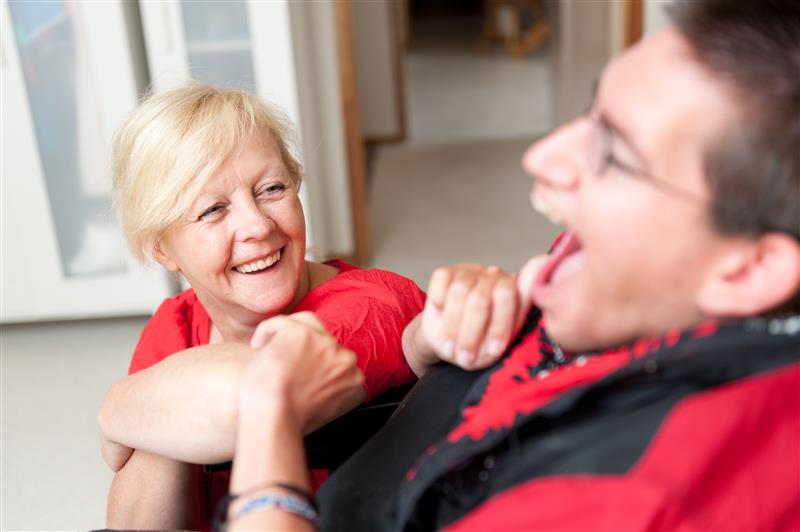
We take a personalised approach to getting you the SIL services you need. If you're in the middle of your NDIS planning process, our knowledgeable team can help you navigate the NDIS, and develop your roster of care. We'll make sure you get a level and type of support that works for you.
How is my roster of care (ROC) and funding coordinated?
We will work with you and your support network to develop a roster of care based on your
support needs, and if you live in shared accommodation or SDA, the support needs of everyone
living in your house. A roster of care is a document that shows your support needs
throughout the week, which support workers will help you, and at what times.
If you live with other people, you might share some supports with your housemates. For example, your support worker might come around to help everyone with their cooking at once, or you might all go to the shops together. That doesn't mean you'll never have one-on-one time with your support worker.
Once we have developed a roster of care you agree with, we will ask you (or your guardian or nominee) to sign it, and then it will be sent to the NDIA to decide how much funding for SIL is reasonable and necessary. If you want more information on what's considered reasonable and necessary in a roster of care, you can look at the NDIA's SIL Operational Guidelines.
Once you, the NDIA and Claro agree to your roster of care, the NDIA will include SIL funding in your plan and you can start getting your services.
Our registered nurses provide direct clinical oversight, developing individualized support plans and training content for support workers to ensure complex medical needs are met safely and consistently.

Every Claro support worker receives training tailored to NDIS Practice Standards, with practical assessments and annual competency checks ensuring they're equipped to handle complex support requirements.
We work with all major Australian funders including NDIS, TAC, WorkCover, iCare, and LSA, managing funding coordination and compliance requirements so you can focus on client outcomes.
Direct access to our clinical team and service coordinators ensures immediate response to changing client needs and efficient communication with your multidisciplinary teams.

With 30 years in complex support and national coverage across Australia, we have the experience and infrastructure to handle even the most challenging cases with confidence.

Our specialized approach has helped thousands of clients achieve greater independence while maintaining the highest safety standards. We regularly exceed quality benchmarks and client satisfaction metrics.

Full accreditation and compliance with NDIS Practice Standards, ensuring all services meet regulatory requirements while delivering exceptional care outcomes.

Recently recognised as the Most Outstanding Disability Support Provider in Australia, demonstrating our commitment to excellence in specialized disability support services.
Our team is ready to discuss how we can support your clients' transition to community-based care. With immediate availability in most regions and flexible service arrangements, we make complex coordination straightforward and reliable.
Talk to Us Today
Supported Independent Living, or SIL, refers to a group of NDIS supports that help you live more independently. SIL funding pays for personal support with everyday tasks like cooking and cleaning, and activities outside the home like grocery shopping or catching public transport. It can also fund supports so you can build these skills over time.
SIL is intended for participants with significant support needs, like a carer for most of the day. Generally participants who receive SIL share a home with other NDIS participants. The amount of SIL funding in a participant’s plan will depend on their support needs, living arrangements, and the other supports funded in their plan. Some people who need assistance with tasks like cooking or getting ready in the morning don’t need assistance for most of the day. SIL might not be the best support option in this case, and you might receive funding for other home and living supports.
To get supported independent living funding in your NDIS plan, you’ll need to talk to your NDIS planner about the help you need to live in your own home. This will probably be discussed in your first planning conversation. If you want to live more independently, your NDIS planner will identify the kinds of supports that will help you do this. You might want to ask your planner about SIL if your goals or living situation change. You will need to tell the NDIA about your change in circumstances, and they will contact you to talk about the supports you need.
To help the NDIA understand your support needs and what you can do independently, it helps to have referrals from health professionals and any of your current carers or support workers. Bring these to your planning conversation.
Leveraging Assistive Technology NDIS Supports with Clinical Oversight to Strengthen Choice and Confidence Supported independent living for people with disability…

When support is complex, confidence matters. For people living with high physical support needs, degenerative conditions or complex health requirements,…

Why Is the Hospital-to-Home Transition So Critical for NDIS Participants? For many people supported under the National Disability Insurance Scheme (NDIS),…